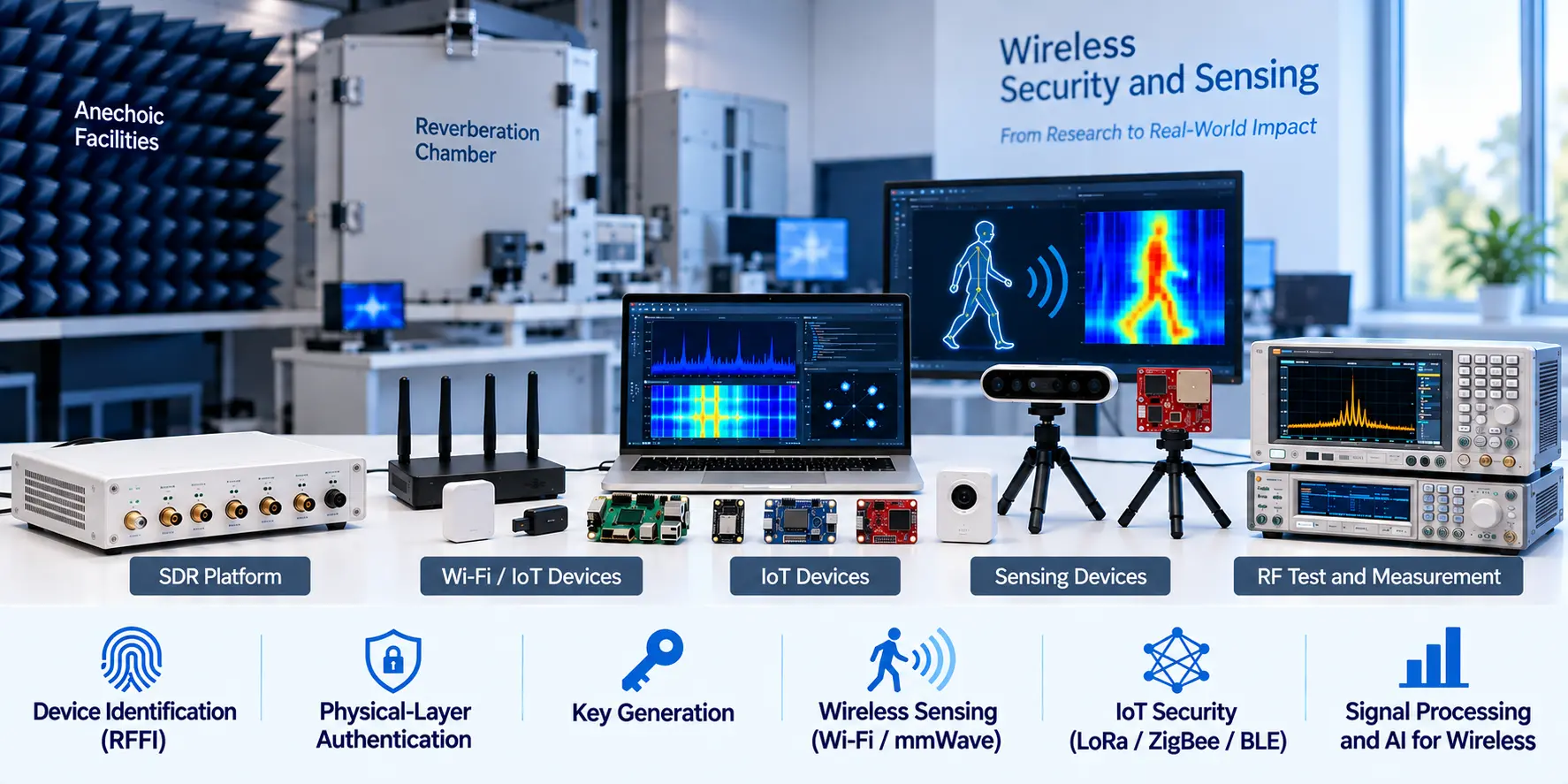
My research focuses on developing innovative physical-layer security and wireless sensing solutions for future wireless and IoT systems. It aims to bridge the gap between theoretical research and practical implementation through advanced signal processing, machine learning, and extensive experimental validation using state-of-the-art wireless testbeds and equipment. Some diagrams in this page were generated by ChatGPT.
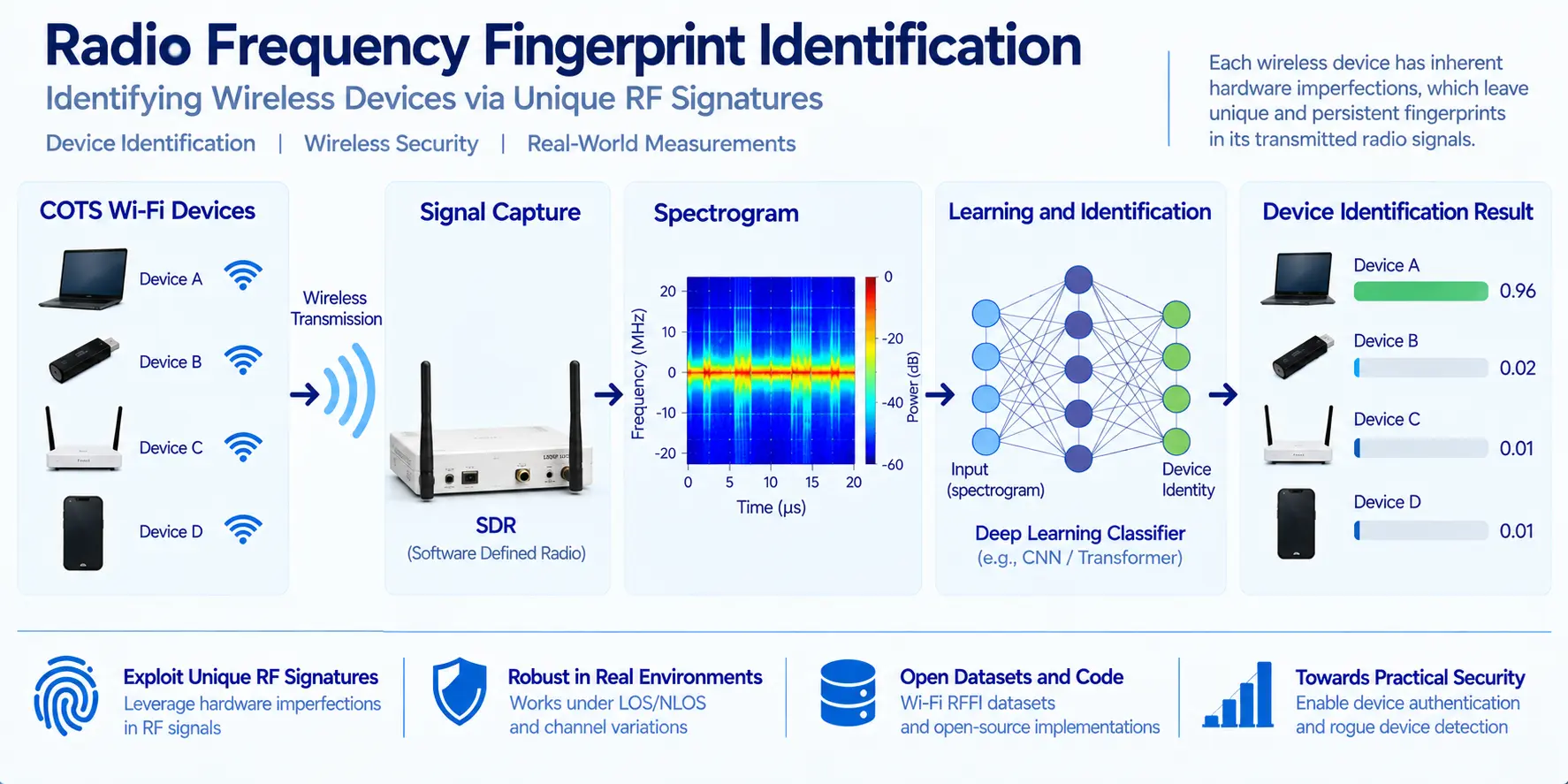
Radio-Frequency Fingerprint Identification
Manufacturing variations give the components of wireless devices slightly different characteristics, such as oscillator frequency offsets. Like biometric fingerprints, these characteristics can distinguish devices. An RFFI system enrols known device fingerprints and subsequently identifies a transmitting device by comparing its signal with the stored fingerprints.
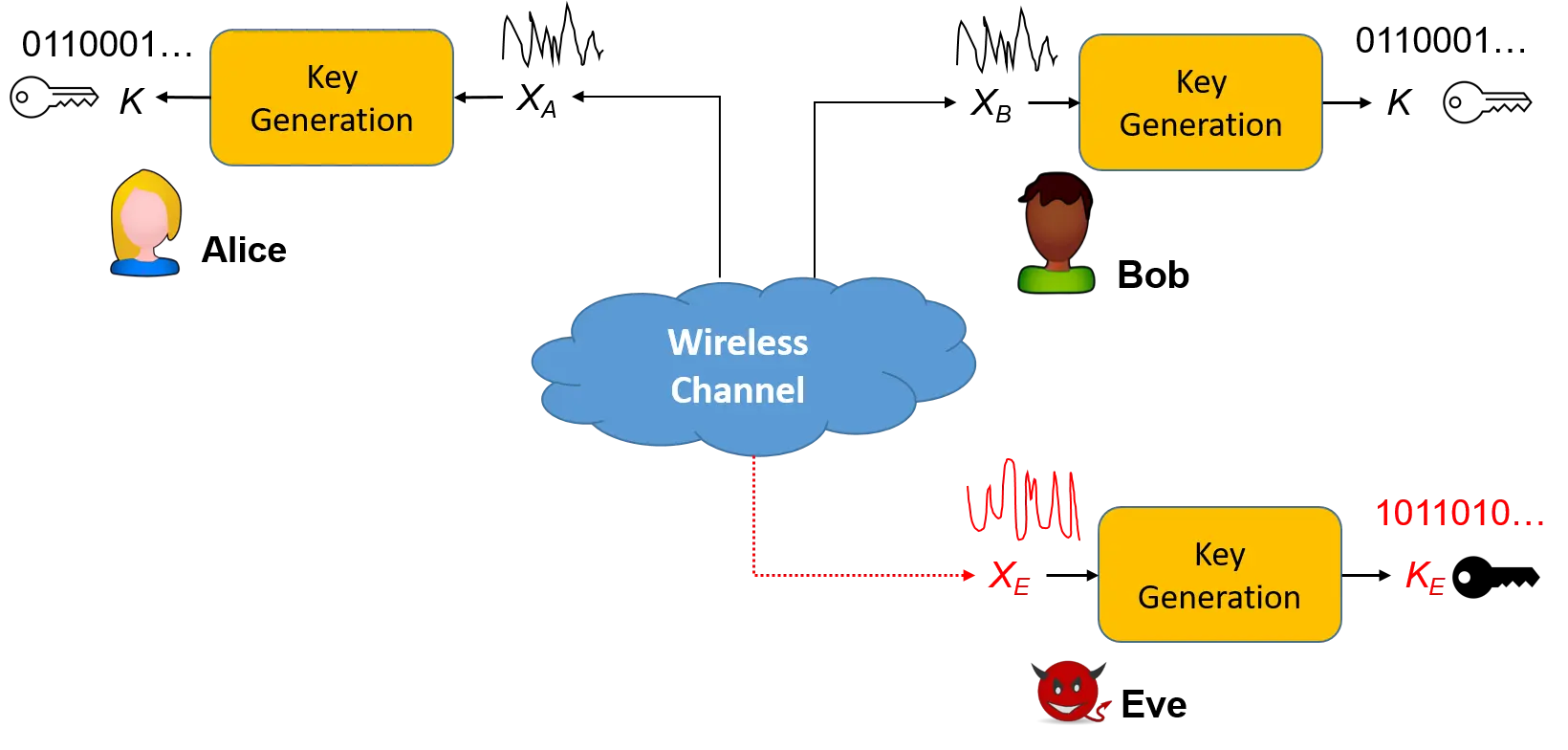
Key Generation from Wireless Channels
Key generation from wireless channels exploits the randomness and reciprocity of wireless propagation to establish shared secret keys between communicating devices. Our research develops robust and efficient key generation techniques for securing wireless and IoT communications without relying solely on conventional key distribution mechanisms.
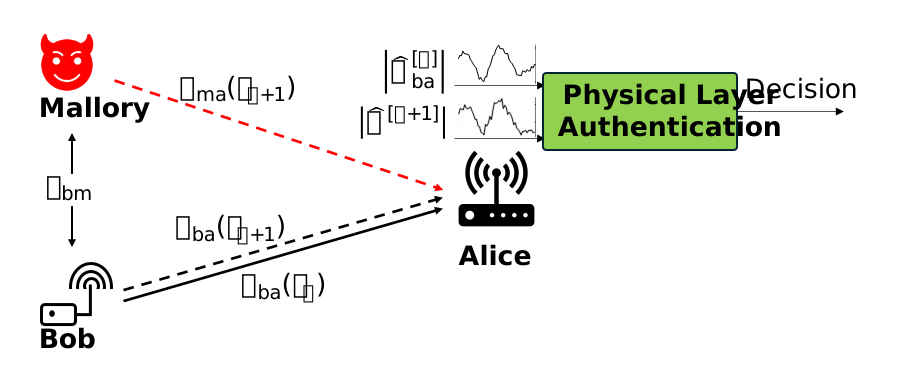
Physical-Layer Authentication
Physical-layer authentication exploits the distinctive characteristics of wireless signals and communication channels to verify the identity of wireless devices. Our research develops signal processing and deep learning techniques for robust and lightweight authentication, complementing conventional cryptographic security mechanisms.
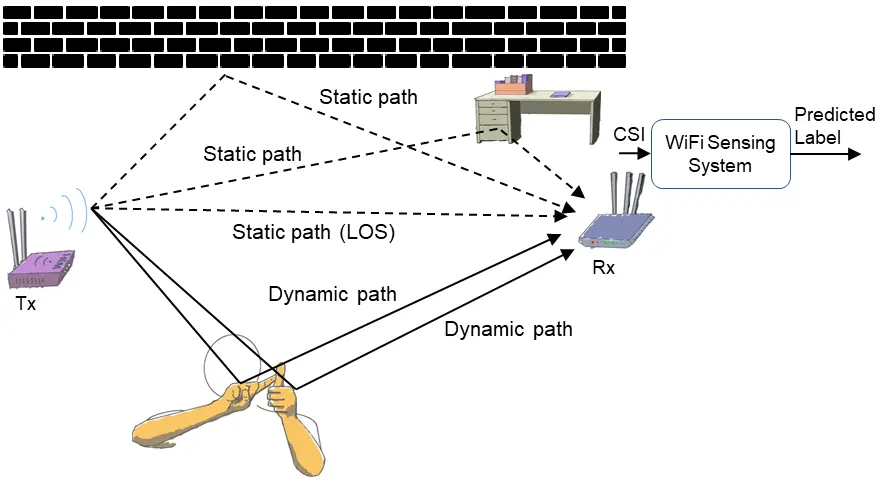
Wi-Fi Sensing
Wi-Fi sensing uses variations in wireless signals to perceive human activities and changes in the surrounding environment. Our research develops advanced signal processing and deep learning techniques to enable robust sensing applications such as activity recognition, gesture recognition, and environmental monitoring using Wi-Fi signals.
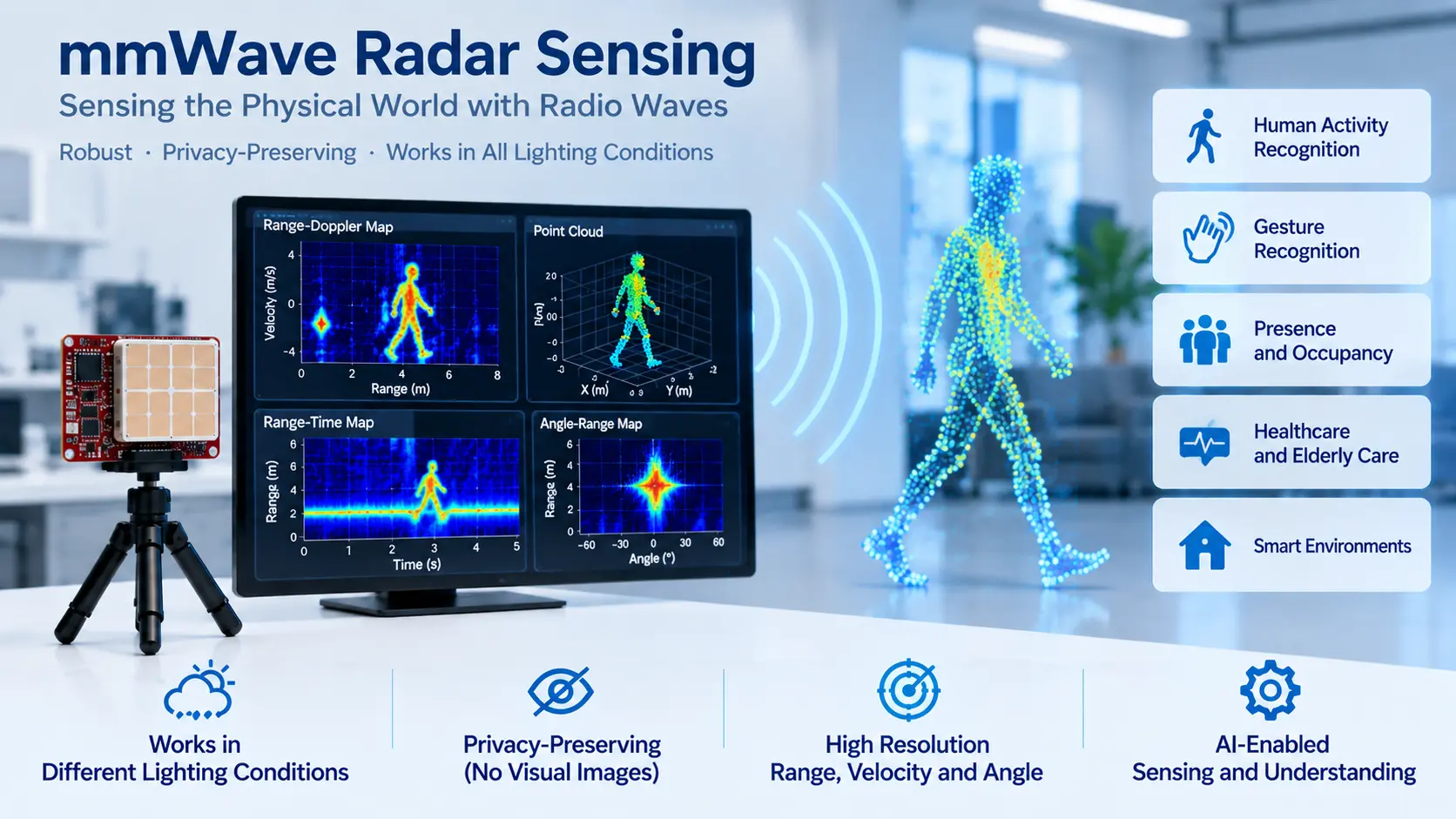
mmWave Radar Sensing
mmWave radar sensing uses high-frequency radio signals to detect and characterise human activities and changes in the surrounding environment. Our research develops advanced signal processing and deep learning techniques for applications such as human activity recognition, gesture recognition, presence detection, and contactless sensing.
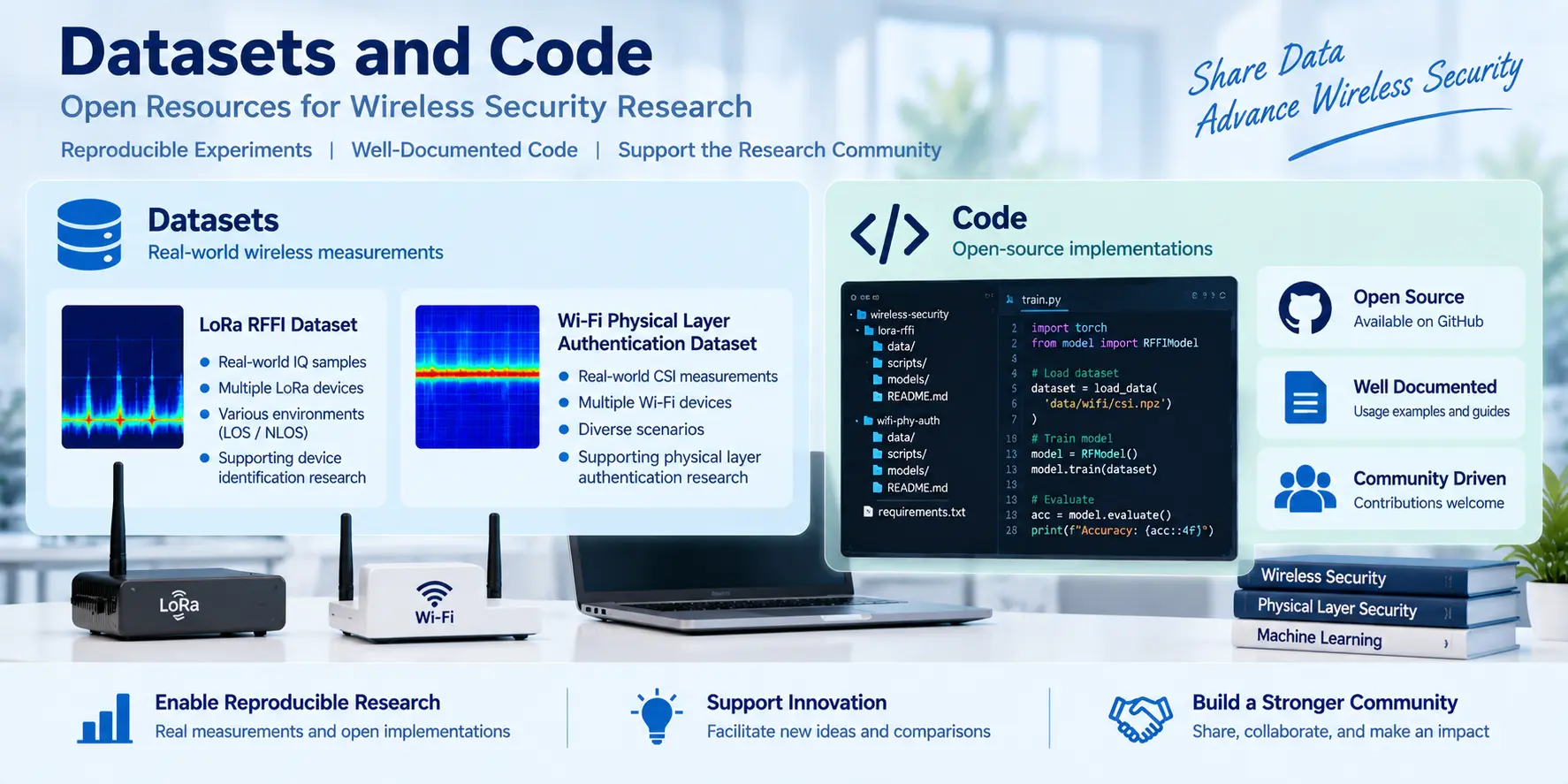
Datasets and Code
Explore research datasets, source code, and experimental resources that support reproducible work in wireless security and sensing.
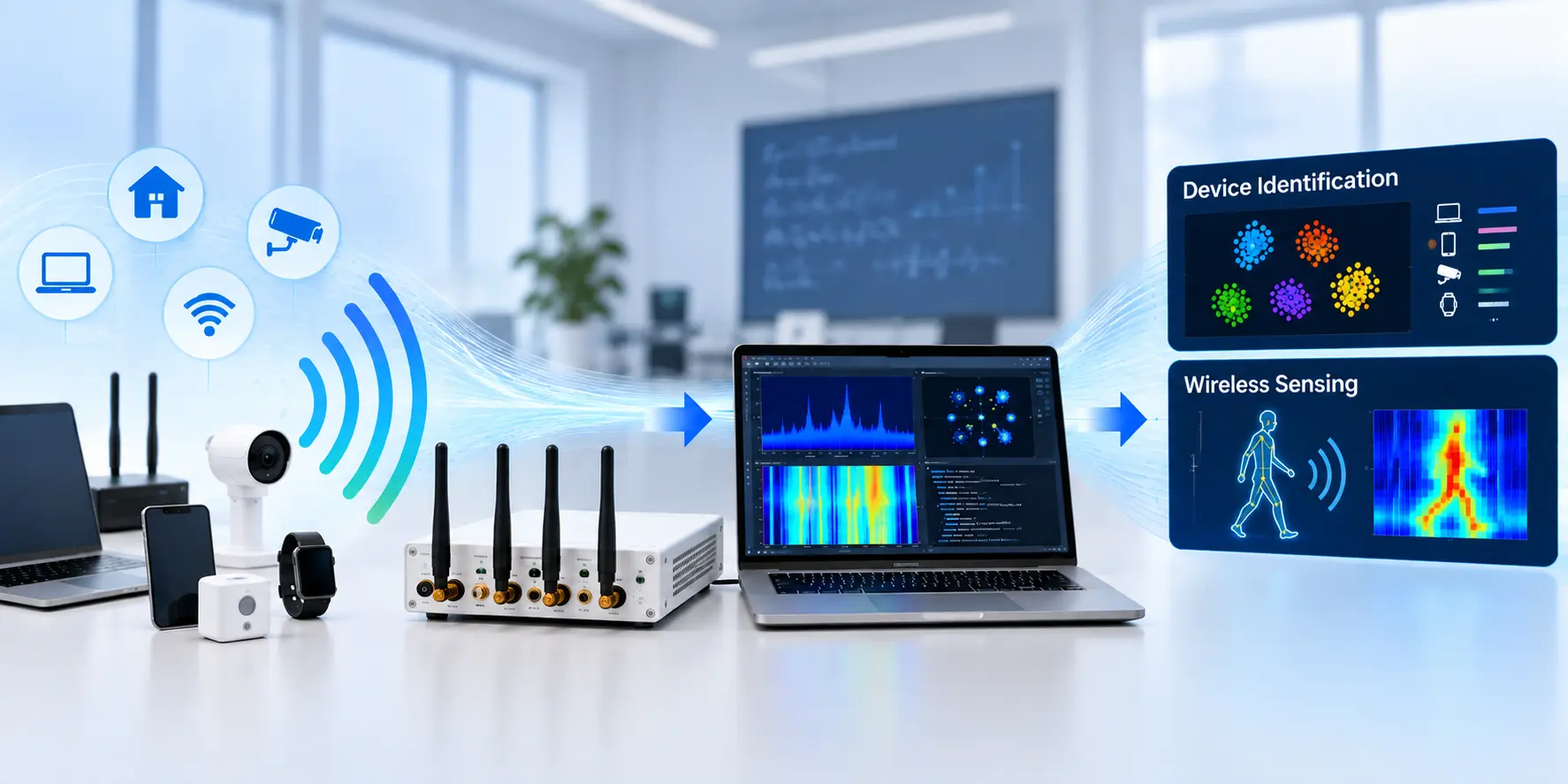
Research Demonstrations
We are always keen to translate our research into practical applications. We have developed a range of research demonstrations to showcase our technologies and their real-world potential.